
Shaw’s Corner: July 2024
Offering a fresh take on George Bernard Shaw’s pertinent play, Mrs. Warren’s Profession, SHAW2020 presented an adaptation that bears striking relevance in today’s social landscape. Famed for being banned by the Lord Chamberlain due to its narrative thread of prostitution, Mrs Warren’s Profession critiques the social and economic systems that force women into exploitative situations. Through sharp direction and evocative performances, the production underscores the timeless themes of societal hypocrisy and personal autonomy.

This design collaboration between director/actor Jonas Cemm, actor/producer Bethany Blake and costume consultant Ruth Hepplethwaite takes us on a journey of discovery of their stylistic choices. Costumes deepening the audience’s understanding of the characters’ complexities and the era’s constraints. The play opens with Vivie Warren, a twenty-something year-old woman wearing wide-leg trousers, attire that instantly attests to the fact that the 1893 play’s timeline has been reset in the 1930s. This era marked a significant shift in both fashion and societal norms, and saw an increasing number of women challenging traditional gender roles by breaking down rigid sartorial conventions. Vivie Warren is a character who bucks tradition, having recently earned distinction in mathematics at Cambridge college. As well as highlighting her modern attitude, her wearing of trousers signals the broader social changes of the time.




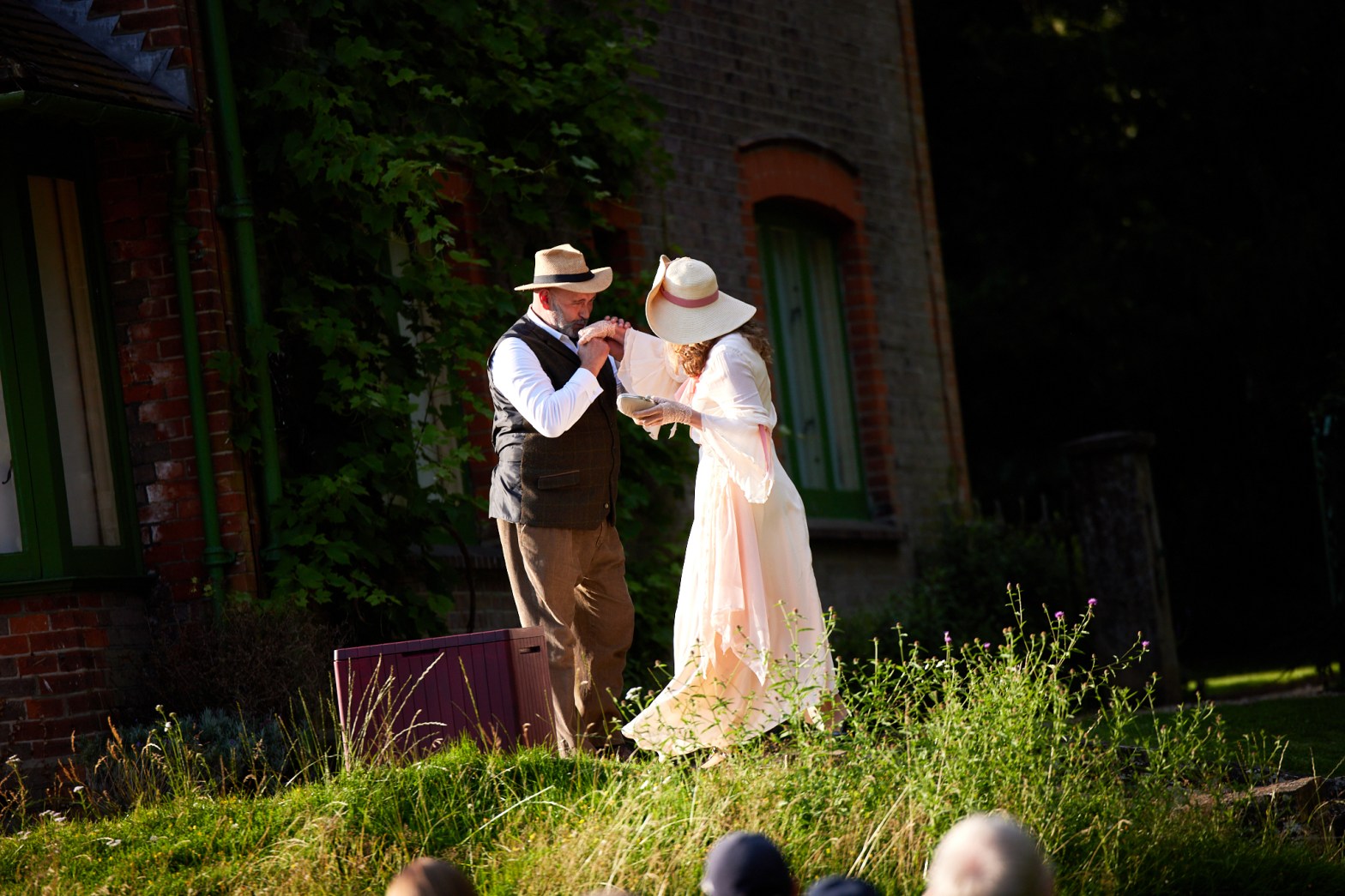
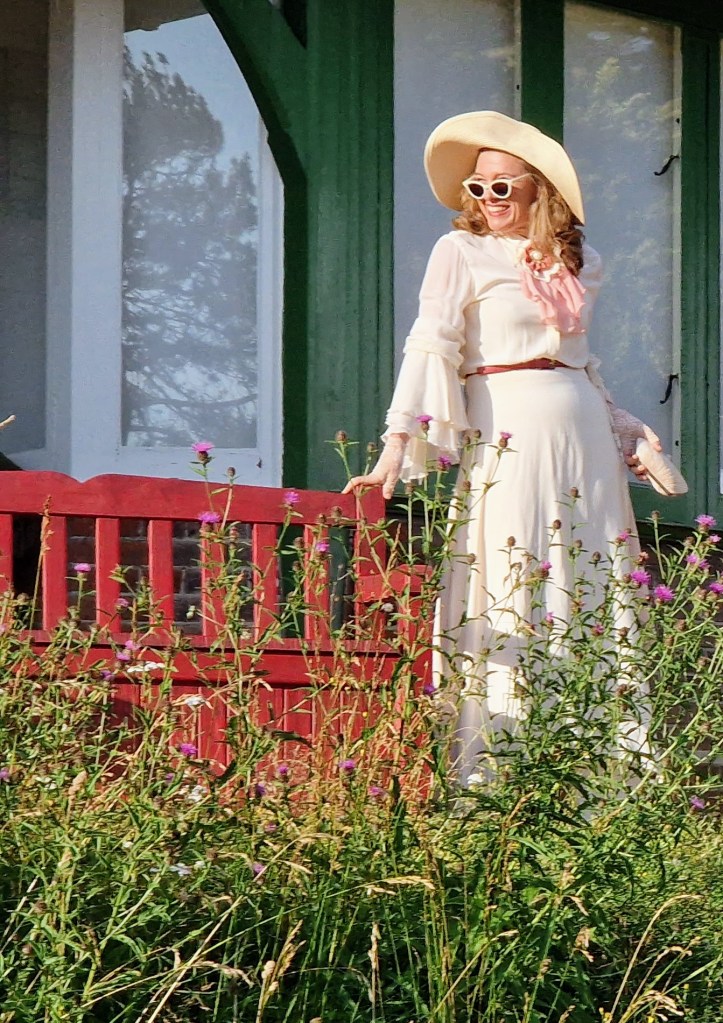
Vivie’s mother, Mrs. Kitty Warren, dramatically enters the scene in a wide-brim straw hat and sunglasses, evoking the air of a Hollywood star. Bedecked in a cream-hued chiffon gown complete with vertiginously tiered angel sleeves, a pink ruffled rosette and lace fingerless gloves, Kitty’s opening costume is intentionally over-the-top and stands in stark contrast to her daughter’s attire. The fluid lines, light tones and ruffled elements all converge to create the illusion of a glamorous, successful woman. Although both women preside over their male companions in this opening scene, Kitty asserts her dominance through an intentionally amplified femininity, whereas Vivie is presented as modern and independent.
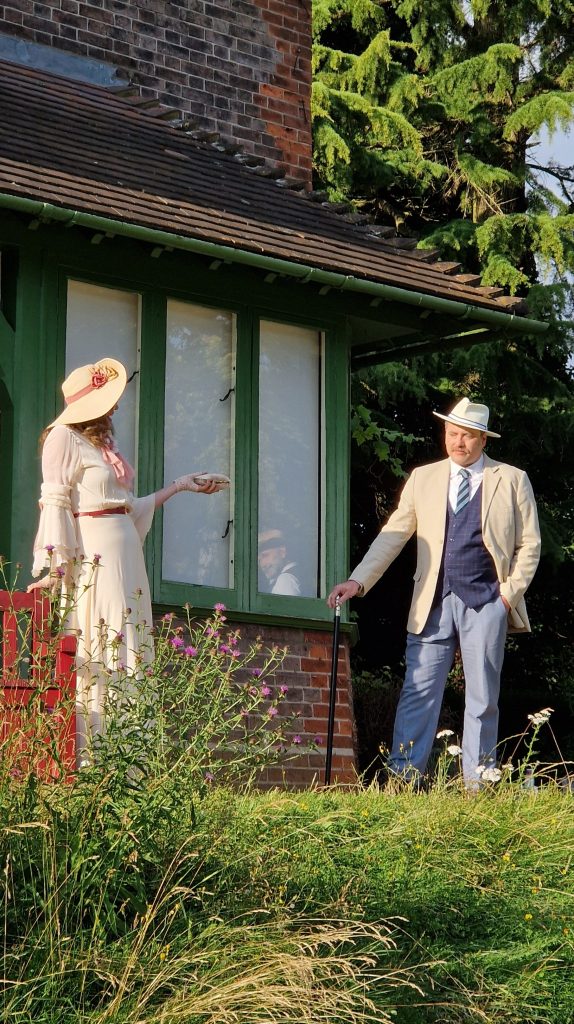
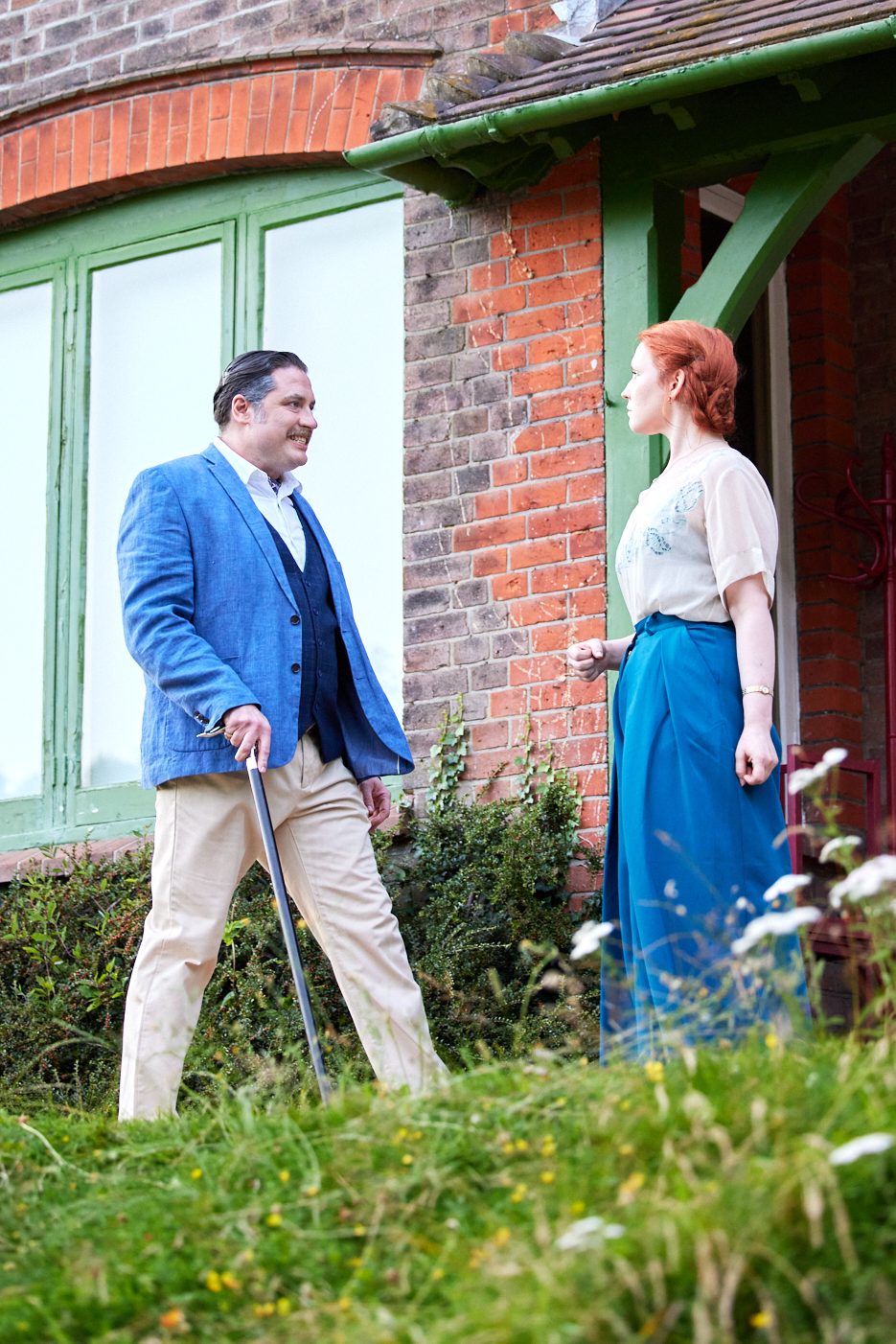
Accompanying Kitty in the opening scene is Sir George Crofts, who is introduced as her business partner. Wearing light summer linens and carrying a rather menacing silver-headed cane, his powerful yet morally questionable character is demonstrated from the offset. While Crofts’ wardrobe seems relatively uncomplicated, in that he is well dressed as an aristocratic gentleman, the artful link to the characters he interacts with is evident in the colours he wears. The neutral tones are complementary to Kitty’s cream gown, a sartorial reference to their flirtatious interactions and longevous partnership. By the next day, Crofts is wearing a cornflower-blue linen jacket in a similar hue to that of Vivie’s trousers. The coordination between the two is a visual attestation of Crofts’ perverted ‘attraction’ to Vivie, a young girl who, it is later revealed, could be his daughter.
Frank Gardner is also romantically interested in Vivie, often engaging in flirtatious and playful conversation with her. However, Frank is financially irresponsible, relying on his father, Rev. Samuel Gardner’s allowance and seeking to marry Vivie largely for her presumed wealth. His boyish charm and frivolity is reflected in the bold colours he wears, as seen with his purple hat and vibrant orange socks. Again, stark contrasts between the costumes are created to indicate the characters’ opposing dispositions. Mr Praed, a close friend of Mrs. Warren, serves as a kind, cultured, and genteel figure, wearing artistic clothing spun from linen or tweed. When set side by side, Frank and Praed’s juxtaposing attire represents their different values.
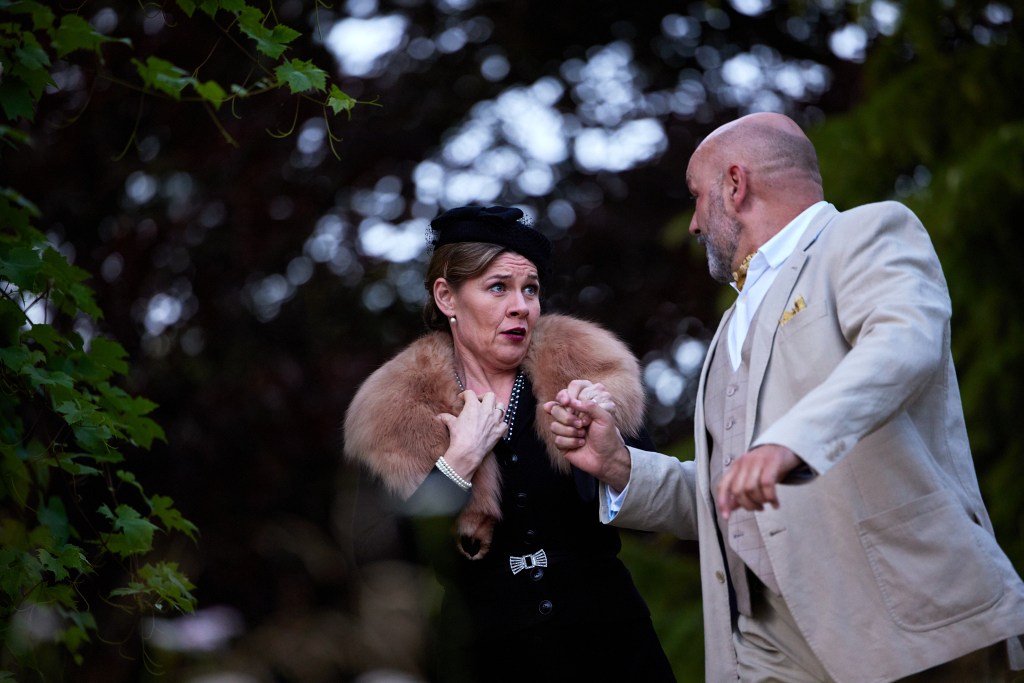
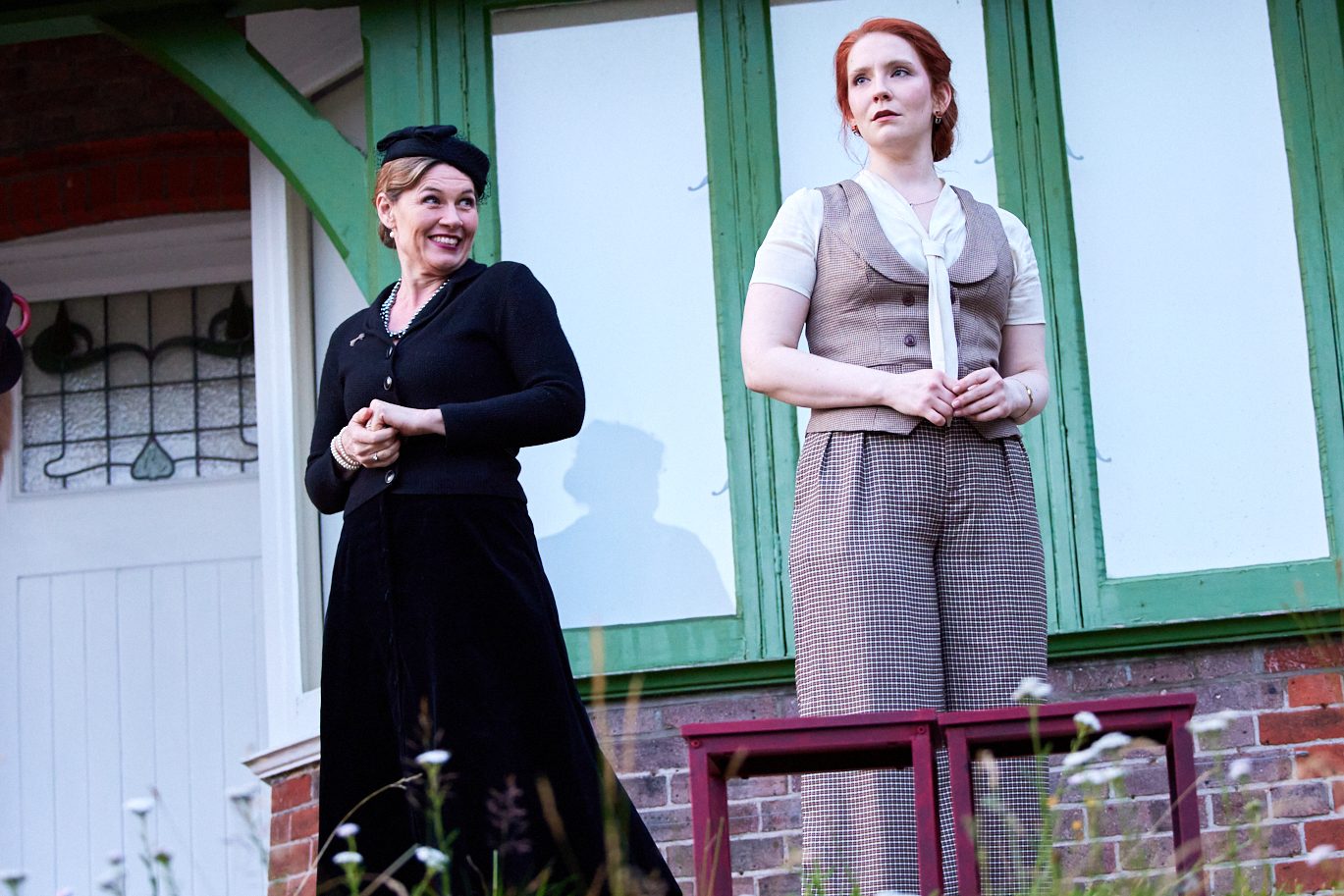
By the final scene, both women have their battle armour on. Having just learned the full extent of Kitty’s involvement in the brothel business, Vivie is visited at work by her mother. Vivie is wearing trousers and a matching waistcoat, spotlighting her status as a professional woman and her values of hard work, independence, and moral integrity. By contrast, Kitty is conservatively dressed in black, almost in mourning attire, a stark juxtaposition to her outfit in the opening scene. The play ends with Kitty heartbroken and alone as Vivie turns her back on her mother, choosing a life of hard work and self-reliance.
This adaptation was not only a compelling exploration of Shaw’s timeless themes but a visual journey through the evolution of each character. The costumes play a crucial role in this transformation, subtly mirroring the shifting dynamics between the characters and their own evolving narratives.
Rose Coffey – Senior Foresight Analyst: Fashion, Retail & Luxury
Photos- Macky Mann

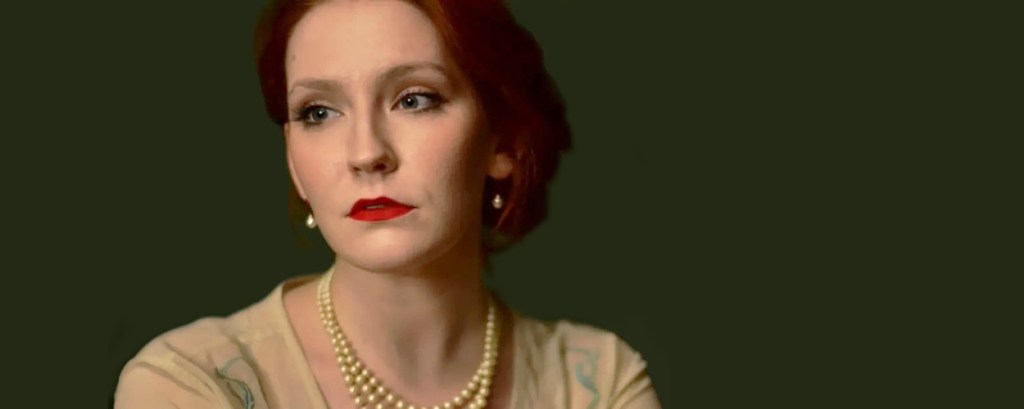

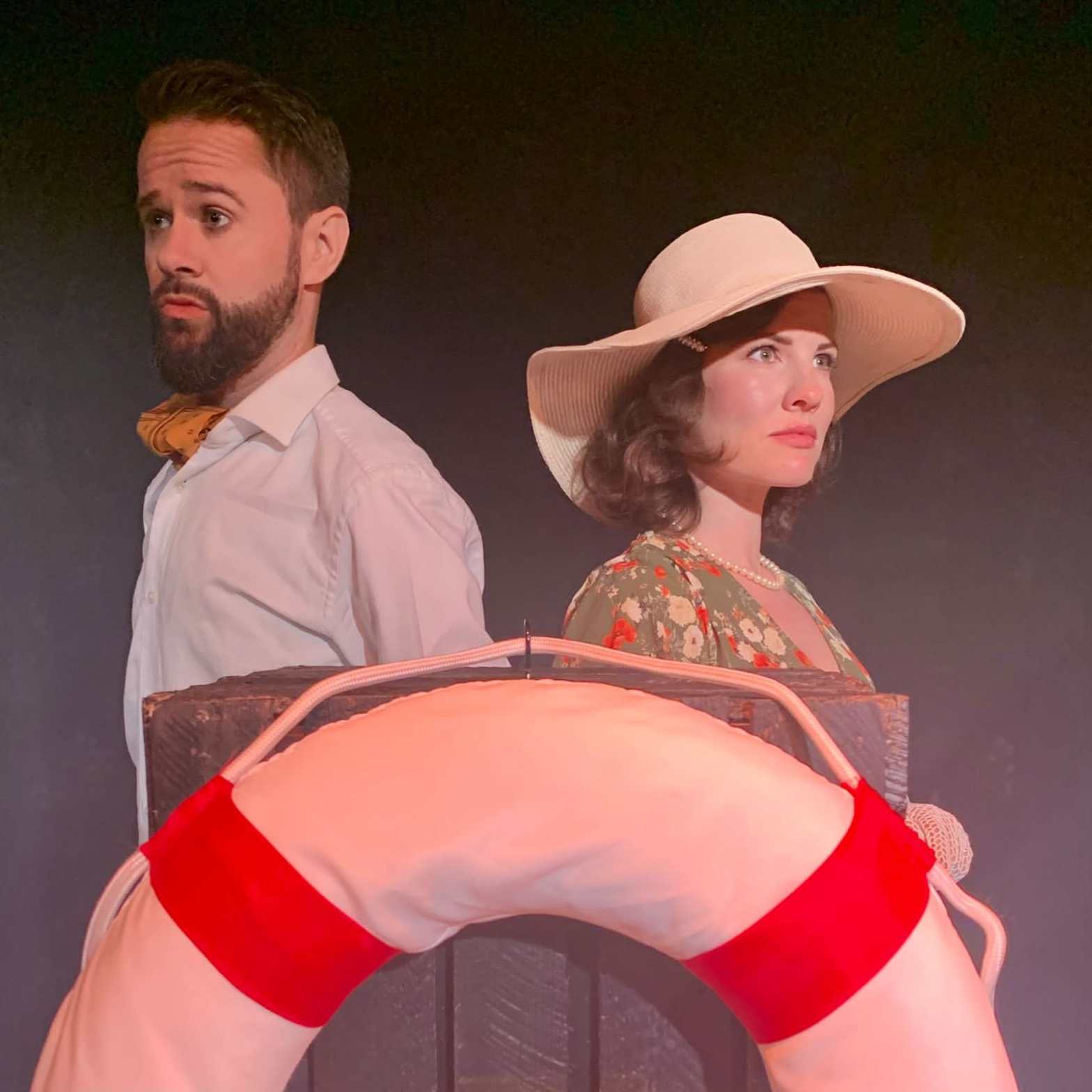









 SHAW2020 Theatre Company